
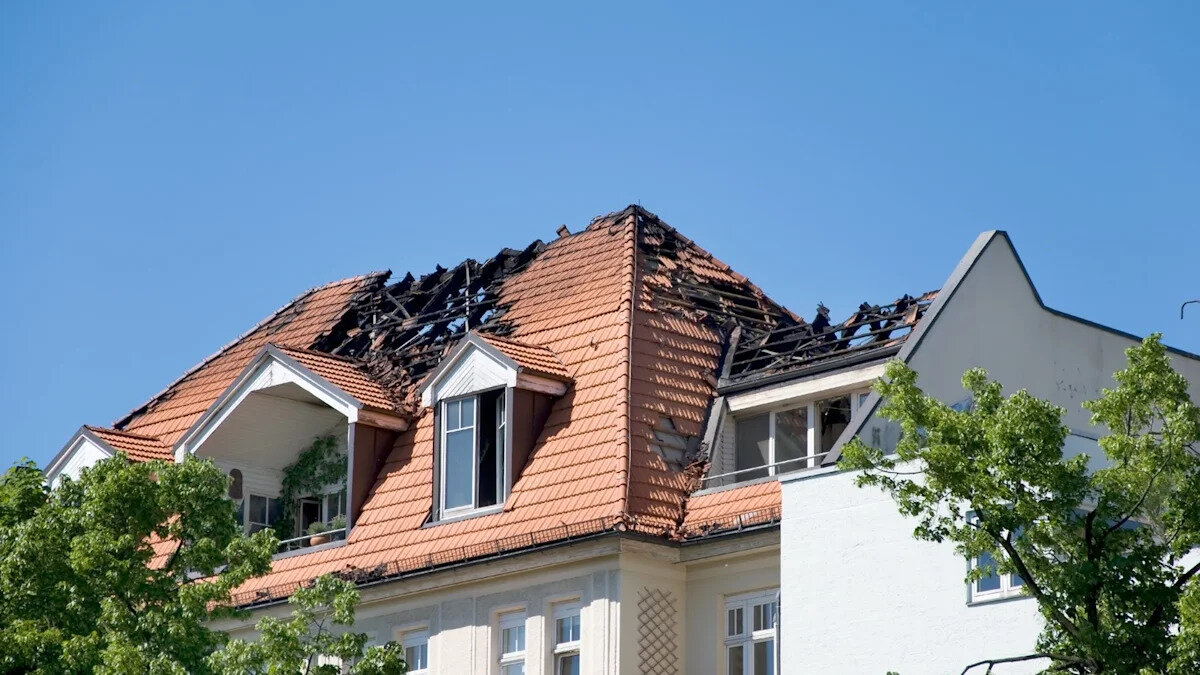
A fire may be contained to the kitchen, yet the next morning the house smells of smoke, water has reached the basement, and an electrician says the power cannot safely be restored. The insurer is gathering information, a contractor wants to open the walls, and the mortgage payment is still due.
If this sounds familiar, you may be wondering whether rebuilding is worth it—or whether you can sell the damaged property and move on. You can often sell a fire-damaged house in Southwest Michigan without making permanent repairs. The better decision depends on what remains safe, what insurance will pay, municipal requirements, and the amount you would actually keep after each option.
This guide explains how to compare restoration with an as-is sale, including fire-specific Michigan rules that general home-selling advice often misses.
Quick Answer: Can You Sell a Fire-Damaged House As-Is?
Yes. Buyers who renovate properties may consider a house with smoke damage, burned framing, a compromised roof, or water damage from firefighting. You do not necessarily need to restore the building first. However, an open insurance claim, a mortgage, a demolition notice, or disclosure duties can complicate the sale.
Your practical choices are to repair and list, list in damaged condition, or compare a direct cash offer. Judge them by net proceeds, uncertainty, obligations after closing, and the work each requires—not sale price alone.
Important Disclaimer: This article is for general informational purposes and is not legal, insurance, tax, or financial advice. Insurance coverage, claim payments, Michigan disclosure requirements, and municipal repair or demolition obligations vary by property and situation. Before selling a fire-damaged home, confirm applicable requirements with your insurer, mortgage lender, local building department, or a qualified Michigan attorney when necessary.
First Steps After the Fire: Protect Yourself and Your Claim
Stay out until entry is authorized. Heat can weaken floors and supports, and wet wiring may remain dangerous. The American Red Cross’s home-fire recovery guidance advises waiting until local authorities say it is safe to return. Never switch utilities back on yourself after a serious fire.
When permitted, photograph visible damage before extensive cleanup. Preserve the fire report, insurance correspondence, receipts for temporary protection, contractor estimates, and any municipal notices. Also document personal belongings separately from damage to the building: the two may fall under different policy coverages.
Ask the insurer about preventing further damage. Temporary boarding or tarping may be appropriate, but permanent demolition or reconstruction should wait until insurance documentation, permits, and inspections have been addressed. Michigan’s Department of Insurance and Financial Services (DIFS) disaster guidance explains recordkeeping and reasonable loss-mitigation steps.
If you have moved elsewhere, arrange for someone authorized to check the property’s security. An unattended, fire-damaged building can become more costly to own even when nobody lives there.
Why Fire Damage Costs More Than the Burned Room
A restoration estimate should address what the fire affected, not just what looks blackened.
Smoke and soot: Smoke can travel into insulation, ductwork, attics, and rooms untouched by flames. Porous materials may retain odors after surface cleaning. Ask how the contractor intends to test and address contamination rather than accepting a vague promise to deodorize the home.
Firefighting water: Water can soak subfloors and wall cavities. A home with substantial water exposure may need drying, material removal, and assessment for moisture-related damage. Our water-damaged house guide explores those issues separately.
Structure and utilities: Heat can affect roof framing, load-bearing elements, wiring, plumbing, and heating equipment. Damage hidden behind finishes may change the scope of work after demolition begins. Read more about selling a structurally damaged house and roof-damage selling options.
Ask whether an estimate covers permits, demolition, debris disposal, inspections, smoke remediation, and a contingency for concealed damage. A low initial bid is not necessarily the final restoration cost.
Compare the scope, not just the number. One contractor may quote for replacing visibly burned surfaces while another includes air-handling components, wiring, concealed framing, and required inspections. Ask each to identify work excluded from the estimate and who pays if further damage appears. It is also worth confirming whether the proposed work actually makes the home eligible for occupancy again. A property that looks finished but cannot pass required inspections may still be difficult to finance or sell.
Insurance Decisions That Affect an As-Is Sale
Before signing a purchase agreement, request a written explanation of your building claim. Actual cash value typically reflects depreciation, while replacement-cost benefits may depend on qualifying repair or replacement expenditures and other policy terms. Michigan law recognizes fire-policy arrangements involving the difference between actual cash value and qualifying repair costs; the Michigan Legislature’s insurance statute provides useful context.
Do not assume you can sell the property, skip rebuilding, and still receive every available replacement-cost payment. Ask your adjuster specifically what changes if ownership transfers before repairs are completed.
A sale also does not automatically determine who receives money from an unfinished claim. Clarify whether the seller retains claim rights, whether the purchaser seeks an assignment, and whether the mortgage lender must approve the distribution of proceeds. Any agreement should clearly allocate those rights; a Michigan attorney or experienced closing professional can help when substantial money is involved.
Keep building coverage, personal-property coverage, and additional living expense benefits separate in your calculations. A temporary housing payment is not automatically part of the price someone is offering for the house.
If the insurer denies or disputes coverage, obtain its explanation in writing. You can review the policy and contact Michigan DIFS while exploring selling options. An unresolved claim is a reason to clarify the transaction—not a reason to guess at the value of insurance money.
What If the House Is Uninsured or Underinsured?
Some owners learn that the building coverage will not cover full reconstruction, especially when a house needs major updates in addition to fire restoration. Others have a lapsed policy or a loss that is not covered. In those cases, build your decision around money you can actually access. Ask contractors for realistic minimum and full-restoration figures, determine what temporary safety work is unavoidable, and compare that obligation with a documented as-is offer. Do not borrow against an assumed insurance settlement. If cash is tight, protecting the building from further damage and addressing official safety notices may be more urgent than planning cosmetic repairs.
Michigan’s Fire Insurance Withholding Program: A Local Detail to Check
In certain participating Michigan municipalities, part of a qualifying building-insurance settlement can be placed in escrow to help protect the community against the costs of an unrepaired or demolished structure.
DIFS says the program generally involves losses exceeding 49% of the insurance on the real property, a participating municipality, and applicable conditions concerning a contracted repair arrangement. The usual withholding calculation is 25% of actual cash value or 25% of the final settlement, whichever is less, subject to residential caps and statutory exceptions. It is not an automatic 25% loss for every fire claim.
For 2026 residential claims:
- Section 2227: Maximum escrow $25,090 from July 1, 2026, through June 30, 2027.
- Section 2845: Maximum escrow $16,383 from January 1 through December 31, 2026.
According to the state’s published participating-municipality list, the cities of Kalamazoo and Grand Rapids fall under Section 2227; Holland, Muskegon, and St. Joseph fall under Section 2845. City limits and adjoining townships are distinct jurisdictions, sometimes governed by different entries. Verify the actual property’s municipality rather than assuming its mailing address identifies the correct authority.
Withheld money is held in escrow; how it is released depends on the statutory process and the condition of the property. Selling the structure does not necessarily settle outstanding municipal responsibilities. Before accepting an offer, ask the insurer and municipality whether a withholding notice applies, and what the closing documents must address.
See the official DIFS withholding FAQ, 2026 escrow limits, and participating-municipality list. Amounts change periodically, so confirm them if you sell in a later year.
Three Selling Routes, With Different Tradeoffs
1. Restore the Home, Then List It
Repairing may produce the highest sale price if the structure is salvageable, contractors are reliable, insurance funding is sufficient, and comparable homes support the finished value. A restored home may qualify for financing that would be unavailable in its damaged condition.
But restoration can expose problems only after walls and ceilings are removed. You remain responsible for carrying costs, contractor coordination, inspections, and the risk of selling at a different price than expected. A cash settlement may also differ from what is available when you actually complete qualifying repairs.
2. List the Property As-Is
Listing without repairs allows the market to compete for the property. Contractors and investors may value the lot, remaining structure, and rehabilitation potential differently. But buyers can still request inspections, negotiate after seeing additional damage, or withdraw under contract contingencies. Conventional financing may be unavailable for severe losses.
Our Southwest Michigan as-is selling guide explains this option in more depth. If you choose to list, discuss how the listing will describe occupancy restrictions and known damage accurately.
3. Compare a Direct Cash Offer
A direct buyer may evaluate the property in its present condition without requiring the seller to restore it first. That can reduce uncertainty about arranging contractors and repeated showings, although buyers still need to inspect safely and review title and municipal obligations.
A cash offer normally reflects estimated repairs, resale costs, holding expenses, and the buyer’s risk; it should not be compared directly with the price of a fully repaired house. Learn how local cash buyers calculate offers before deciding whether this route fits.
What Is a Fire-Damaged Home Worth in Southwest Michigan?
Begin with the value of comparable homes after proper restoration, not simply the property’s tax assessment or what you paid for it. Then examine realistic repair estimates and the expenses needed to reach that value.
A rough buyer-side framework is: restored value − rehabilitation costs − carrying and sale expenses − required risk margin = potential as-is price. It is a decision tool, not a guaranteed offer formula or appraisal.
Location, lot value, pre-fire condition, remaining building components, access restrictions, and permitting risk can all change the result. The more concealed damage remains unknown, the wider the range of reasonable estimates can become. Our pricing guide for houses needing repairs explains that difference.
Example: A Kalamazoo-Area House After a Kitchen Fire
Consider an illustrative, not actual, property with a potential restored value of $255,000. Fire and smoke affected several rooms; water reached the lower level. The owner gathers preliminary quotes and compares the likely net proceeds:
| Estimated item | Repair, then list | Sell as-is |
|---|---|---|
| Selling price | $255,000 | $145,000 |
| Restoration | −$90,000 | $0 |
| Selling and closing expenses | −$16,000 | −$4,000 |
| Holding and protection costs | −$12,000 | −$3,000 |
| Mortgage payoff | −$72,000 | −$72,000 |
| Illustrative net before insurance | $65,000 | $66,000 |
The repaired house sells for $110,000 more, yet both paths produce similar modeled proceeds. A $20,000 repair overrun would change the comparison dramatically; so could additional insurance benefits available only after restoration.
Insurance settlements are excluded intentionally. You should separately calculate what you are actually entitled to receive, considering deductibles, lender interests, holdbacks, and possible escrow. The numbers above are hypothetical, not a local valuation estimate or a typical transaction.
Mortgage, Disclosure, and Municipal Requirements
Existing mortgage: Fire damage does not erase the loan. Request a payoff statement and ask the servicer how insurance checks will be handled. The lender may have a financial interest in the settlement. If the sale will not cover the required payoff, you may need additional funds or lender approval for a different arrangement. See selling a house with a mortgage.
Seller disclosure: For residential transfers covered by Michigan’s Seller Disclosure Act, the statutory form asks about major damage from fire and other property conditions. An as-is contract does not mean a seller may conceal known problems. Some transfers qualify for exemptions, so ask a Michigan attorney if your situation is unusual. Review the Michigan disclosure form and our plain-language disclosure guide.
Local building orders: A fire department or building official may restrict occupancy or require securing, repairing, or removing an unsafe structure. Ask for copies of orders and clarify who must complete required work. For example, the City of Grand Rapids demolition permit page explains local demolition permissions. Our code-violation guide covers related concerns. A private buyer’s promise does not automatically waive a city’s requirements.
Selling Without Repairs: A Practical Process
1. Establish a safety and information baseline. Gather incident records, photographs, ownership documents, insurance correspondence, and any official building notices. State what is known and what has not been inspected rather than guessing about concealed damage.
2. Clarify the claim and lender positions. Ask what payments are approved, pending, or contingent on rebuilding. Obtain an updated mortgage payoff and determine whether insurance proceeds must be endorsed or held by the lender.
3. Choose your level of involvement. Can you manage contractors? Would you prefer a listing, even if it involves buyer negotiations? Or are you seeking to compare an offer for the property in its current condition? If you cannot supervise an empty building, read our vacant property selling guide.
4. Request realistic written offers. Give serious buyers the same relevant information and permit safe access where allowed. Ask whether the offer is subject to inspection, financing, title review, or a later price reduction.
5. Review responsibilities in the agreement. Determine who handles debris, remaining belongings, open permits, insurance rights, municipal orders, and property protection before closing. Confirm that any buyer claiming to pay cash can show appropriate proof of funds.
6. Coordinate closing. A title professional should account for mortgages, liens, taxes, ownership issues, and the parties’ contractual obligations. Closing speed depends on what must be resolved; it should not be promised simply because a buyer says they use cash.
Six Questions to Ask Before Accepting an As-Is Offer
- Is the price based on the current condition, or can it change after inspection? Ask which contingencies remain.
- Will you have to clear debris or personal belongings? Get cleanup responsibilities in writing.
- Who receives any unpaid insurance proceeds? Do not rely on verbal assumptions about claim rights.
- Who will address a repair-or-demolish order? Check with the municipality before accepting the proposed arrangement.
- What reduces your net payment? Include payoff amounts, closing charges, taxes, and property-protection expenses. Our seller closing-cost guide may help.
- Can the buyer perform? Request proof of funds, review the contract, and watch for pressure tactics. See our guide to recognizing questionable cash-buyer practices.
Local Conditions Worth Considering
A fire-damaged house in Kalamazoo or Battle Creek may face different resale demand from a property in Holland or Muskegon. Local buyers will consider the neighborhood, remaining structure, renovation costs, and the finished home’s likely value, not merely its square footage.
Southwest Michigan weather matters too. An opened roof or broken windows can admit rain and snow, while a disconnected heating system creates winter risks. If the house is unoccupied, secure it and confirm that any insurer-imposed safeguards are being followed. For persistent moisture concerns, see our separate mold-damaged property guide.
Most importantly, identify the exact city or township responsible for the property. A mailing address alone does not establish the rules for escrow participation, rebuilding permits, or unsafe-building notices.
Frequently Asked Questions
Can I sell a fire-damaged house in Southwest Michigan without repairs?
Yes. Some buyers purchase damaged property as-is, but title, safety restrictions, disclosures, and outstanding municipal obligations still matter.
Can a cash buyer purchase a house with structural fire damage?
Possibly. Buyers evaluate the remaining structure, repair budget, permits, market value, and risks before making an offer.
Can I sell while my fire insurance claim is still open?
Sometimes. Have the insurer, lender, and closing professional clarify unpaid proceeds and claim rights before signing.
Will I receive full replacement-cost insurance benefits if I sell as-is?
Not necessarily. Additional payments may depend on repair or replacement conditions in your policy.
How do I know whether Michigan will withhold insurance proceeds?
Check the property’s exact municipality against DIFS’s participating list and ask the insurer whether your loss meets program requirements.
Must I clean smoke damage before selling?
Not always. An as-is purchaser may account for professional remediation in the price, while access and safety requirements still apply.
Can I sell a fire-damaged home if I still owe a mortgage?
Yes, provided the sale and any insurance payments properly address the lender’s rights and required payoff.
What if the city orders repairs or demolition?
Obtain the written order and verify deadlines, responsibilities, and whether the proposed buyer can assume any obligations.
Do I need to disclose a previous house fire in Michigan?
Covered residential transactions generally require disclosure of known major fire damage and relevant property conditions; statutory exceptions exist.
Will an as-is fire-damaged house sell for less?
Usually less than a comparable fully restored home. The useful comparison is net proceeds after costs, not the headline sale price.
How long does a cash sale take after a fire?
Timelines vary. Insurance disputes, title issues, unsafe-building orders, and mortgage requirements can delay even a cash transaction.
Should I repair the house or sell it as-is?
Compare credible restoration estimates, insurance entitlements, likely sale proceeds, carrying costs, and how much risk you can manage.
Decide What Makes Sense for Your Property
A house fire leaves several decisions intertwined: whether rebuilding is financially sensible, whether insurance will cover the work, and what the local authority requires of the property. You do not have to settle every construction question before exploring an as-is sale, but you should understand the obligations that would remain.
I Buy SW MI offers Southwest Michigan homeowners an option to compare a direct purchase with repairing or listing their homes. We can review the condition and explain the basis of an offer without promising that every damaged house qualifies or that unresolved issues disappear at closing.
Learn how our buying process works or contact I Buy SW MI to discuss a fire-damaged property. Use that offer alongside restoration estimates and professional insurance guidance to choose the path that protects your interests.