
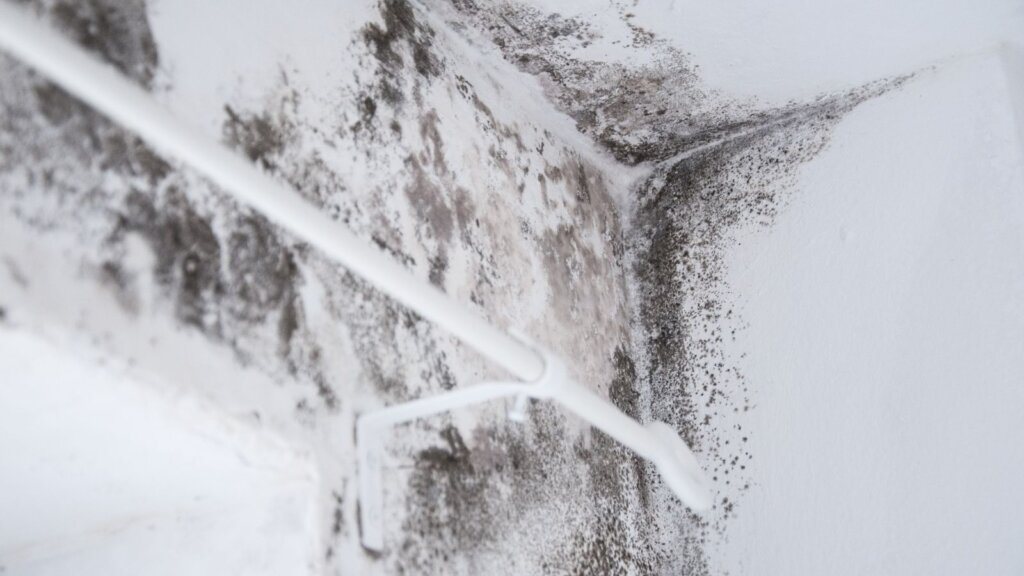
Mold does not automatically prevent a Southwest Michigan house from being sold. The harder question is whether repairing it first will leave you with more money—or simply add cost, delays, and another project to manage.
You may be able to correct the moisture source and remediate the affected area, market the house as-is through a real estate agent, sell without an agent, or consider a direct cash offer.
Before choosing, look beyond the visible mold. A leaking roof, basement seepage, plumbing failure, or damaged building material may affect the sale more than the mold itself.
Quick Answer
You can sell a house with mold in Southwest Michigan without completing remediation first. Your options include repairing and listing, listing as-is, selling without an agent, or considering a direct cash buyer. Compare expected net proceeds, moisture-source repairs, buyer financing, time, and work required—not only the advertised sale price.
Start With the Moisture Problem, Not the Stain
Mold needs moisture to grow. Cleaning a wall without addressing the roof leak, plumbing failure, wet basement, or ventilation problem usually leaves the underlying issue unresolved.
The EPA’s homeowner mold guide recommends cleaning mold and correcting the water or moisture source. It also warns against painting or caulking over moldy surfaces before they have been properly cleaned and dried.
Possible moisture sources include:
- Roof or flashing leaks
- Basement seepage
- Foundation or drainage problems
- Failed sump pumps
- Plumbing leaks
- Wet crawl spaces
- Poor bathroom ventilation
- Condensation around windows or pipes
- Water heater or appliance failures
- Storm or flood damage
- A vacant house left without consistent heating or airflow
For an older home in Kalamazoo or Battle Creek, a musty basement may point to seepage, a sump-pump issue, or an old plumbing leak. At a seasonal property near South Haven or St. Joseph, moisture may not be noticed until the house is reopened after months of limited airflow.
These are examples, not diagnoses. The condition of each property needs to be evaluated individually.
Homeowners dealing with both visible mold and previous leaks may also find the related guide to selling a water-damaged house in Southwest Michigan helpful.
Do You Need Mold Testing Before Selling?
Not necessarily.
When mold is already visible, testing may not change what needs to happen next. The Michigan Department of Health and Human Services states that it does not recommend routine mold testing, cannot test private homes, and does not certify mold testing or remediation companies. Its Michigan mold resources provide cleanup, health, and homeowner information.
An inspection or professional assessment may still be useful when:
- You cannot identify the moisture source.
- The mold may extend behind drywall or under flooring.
- The HVAC system may be affected.
- The damage followed contaminated water or sewage.
- You need a written scope before comparing contractors.
- A buyer requests additional documentation.
- An insurance or legal dispute is involved.
- Someone entering the property has respiratory or immune-system concerns.
The EPA says homeowners may be able to handle an area smaller than roughly 10 square feet in some circumstances. Larger areas, extensive water damage, contaminated water, or possible HVAC contamination may justify professional assistance. The CDC also advises people with asthma, chronic respiratory disease, immune suppression, or heightened sensitivity to avoid mold cleanup.
Can You Sell a Mold-Damaged House As-Is?
Yes. Selling as-is generally means you are offering the property in its current condition rather than promising to complete repairs before closing.
It does not necessarily mean:
- The buyer cannot inspect the house.
- The buyer cannot ask questions.
- The buyer cannot cancel under the contract.
- The price will never be renegotiated.
- Known conditions can be concealed.
- Every buyer or lender will accept the property.
A buyer using mortgage financing may have concerns if mold is connected to active water intrusion, damaged drywall, an unsafe roof, structural deterioration, or another condition that affects the appraisal, insurance, or loan requirements.
An investor or direct cash buyer may be more comfortable assuming responsibility for those repairs, but the offer will generally reflect the condition and risk.
For a broader explanation of as-is transactions, review Selling a House As-Is in Southwest Michigan.
What Should a Michigan Seller Disclose?
Michigan’s statutory Seller’s Disclosure Statement asks sellers to provide information about known property conditions, including evidence of water in a basement or crawl space, roof leaks, environmental hazards, flooding, drainage problems, structural issues, and major property damage. The form also advises buyers to consider evidence of mold and mildew during their inspection.
An as-is contract and a seller’s disclosure responsibilities are separate matters. The requirements may depend on the type of property, the parties involved, the seller’s knowledge, and whether an exemption applies.
Do not cover visible growth, replace stained material, or describe a moisture problem as corrected unless you can accurately explain what work was completed.
Keep copies of:
- Inspection reports
- Contractor proposals
- Remediation invoices
- Before-and-after photographs
- Moisture readings
- Roof, plumbing, or drainage repair records
- Insurance documents
- Warranties
- Communications concerning known water problems
This article is general homeowner education, not legal, medical, insurance, or real estate advice. Consult a Michigan real estate attorney, licensed real estate professional, qualified mold professional, healthcare provider, or insurance professional when appropriate.
Four Realistic Ways to Sell a House With Mold
The most suitable path depends on the likely repaired value, complete project cost, time available, and how much uncertainty you are willing to accept.
| Selling path | May fit when | Main benefit | Main tradeoff |
|---|---|---|---|
| Repair and remediate before listing | You have funds, time, and reasonable confidence that the work will improve the final net proceeds | May attract more owner-occupant buyers | Requires upfront spending and contractor management |
| List the house as-is with an agent | You want open-market exposure without completing the repairs | May attract multiple investors or renovation buyers | Inspections, financing, and negotiations can still affect the sale |
| Sell without an agent | You already have a qualified buyer or transaction experience | Direct control over the sale | You manage pricing, access, disclosures, documents, and negotiations |
| Sell directly to a cash buyer | You value condition flexibility and want to avoid managing the work | May reduce repairs, cleaning, showings, and financing uncertainty | The offer may be lower than a successful repaired retail sale |
Repair and Remediate Before Listing
Repairing first may make financial sense when the mold is limited, the moisture source is clear, and the house has strong retail potential after the work is complete.
Ask each contractor for a detailed written scope covering:
- The moisture source
- Areas to be contained
- Materials to be removed
- Materials to be cleaned
- Drying procedures
- Structural or mechanical repairs
- Reconstruction
- Disposal
- Documentation
- Post-remediation verification, if included
Two bids with similar totals may describe very different work. One contractor may quote only removal and treatment. Another may include leak repair, containment, drywall replacement, insulation, painting, and reconstruction.
Repairing first is not automatically the financially safer choice. A project that uncovers additional rot, damaged framing, or continued seepage can change the seller’s calculation quickly.
If mold is only one of several expensive problems, see how to sell a Southwest Michigan house that needs major repairs.
List the Property As-Is
A local real estate agent experienced with fixer-uppers may be able to market the house to investors, landlords, contractors, or buyers using renovation financing.
Ask the agent for two estimated net sheets:
- One based on repairing and listing
- One based on an as-is sale
The repaired-sale estimate should account for more than the contractor’s bid. Include taxes, utilities, insurance, lawn care, cleaning, commissions, seller concessions, and the possibility of additional buyer-requested work.
The as-is estimate should reflect the likely buyer pool, inspection terms, financing risk, and expected days on market.
An as-is listing can produce a better result than a direct offer when the property attracts several qualified buyers. It can also take longer and require more seller involvement.
Sell Without an Agent
A for-sale-by-owner sale may work when you already know a capable buyer or are comfortable coordinating a real estate transaction.
You will need to manage:
- Pricing
- Marketing
- Property access
- Buyer qualification
- Disclosures
- Inspection terms
- Purchase agreement language
- Title work
- Mortgage and lien payoffs
- Closing coordination
Do not assume a buyer is qualified merely because the offer says “cash.” Request appropriate proof of funds and review the purchase agreement carefully.
Request a Direct Cash Offer
A direct sale may be worth considering when you do not want to pay for remediation, coordinate contractors, empty the property, or prepare it for repeated showings.
I Buy SW MI is a local direct property buyer serving homeowners in Southwest Michigan. The company’s published home-buying process begins with property information, followed by a review or walkthrough and a written cash offer when the property fits its buying criteria. If the seller accepts, the transaction moves through a title company and closing process.
A direct sale may provide convenience and fewer lender-related variables. It may not produce the same price as a house that has been fully repaired, documented, marketed, and sold to a retail buyer.
The question is not simply, “Which offer is highest?” It is, “Which option produces the best acceptable result after accounting for money, work, time, and risk?”
How to Compare the True Net Result
A list price and a cash offer are not directly comparable.
Estimate the net result from repairing and listing
Begin with a realistic expected sale price, not the highest asking price in the area.
Then subtract:
- Moisture-source repairs
- Mold remediation
- Demolition and disposal
- Reconstruction
- Cleaning and property preparation
- Agent compensation
- Seller concessions
- Inspection-related repairs
- Taxes, utilities, and insurance while work is completed
- Maintenance and lawn care
- Closing expenses
- A contingency for work not included in the original bids
Review the complete terms of an as-is or cash offer
Confirm:
- Who is purchasing the property
- Whether the contract can be assigned
- Whether proof of funds is available
- Whether an inspection is permitted
- Whether the price can change after the walkthrough
- Which party pays each closing expense
- Whether there are administrative or service fees
- How title defects or liens will be handled
- Whether belongings may remain
- The proposed closing date
- What happens if the buyer cannot close
- The seller’s cancellation rights
A lower, clearly written offer may be stronger than a higher offer containing uncertain financing, broad cancellation language, or likely repair demands. A properly marketed as-is listing may still provide a better result when the house, timeline, and local demand support it.
Example: Repair, List As-Is, or Sell Directly?
Consider three siblings who inherit an older house in Kalamazoo County.
Water has been entering one basement corner, and visible mold appears on drywall installed by a previous owner. The siblings live in different states and cannot agree on how much work to authorize.
One proposal covers drywall removal, treatment, and drying but excludes exterior drainage. A second includes drainage improvements and reconstruction but costs substantially more.
The siblings should not compare only the contractors’ totals. They need to determine whether each proposal addresses the water source, what could be discovered after the wall is opened, and how long the house will continue generating taxes, insurance, utility, lawn-care, and maintenance expenses.
Their realistic choices include:
- Fund the complete project and pursue a retail sale.
- Market the house as-is through a local agent.
- Compare direct offers from buyers willing to assume the repairs.
- Keep the property if the family has a workable use and maintenance plan.
The repaired sale might produce more money, but only if the additional sale proceeds reasonably exceed the complete project and holding costs. A direct sale could reduce the siblings’ management burden, but they should still compare more than one option before committing.
Mistakes That Can Make the Sale Harder
Treating the visible mold as the whole problem
The costly part may be the leaking roof, damaged drainage system, plumbing failure, wet insulation, or deteriorated framing behind it.
Painting over the affected area
Paint does not correct active moisture. The EPA advises cleaning and drying moldy surfaces before painting because paint applied over mold is likely to peel.
Accepting a vague remediation proposal
A useful proposal should explain what will be removed, cleaned, repaired, contained, dried, and rebuilt.
Assuming Michigan certifies mold contractors
Michigan does not provide state certification for mold testing companies or mold remediators. Review experience, references, insurance, written procedures, and the proposed scope instead.
Looking only at the gross selling price
A repaired sale can have the highest price but still create a weaker net result after repairs, carrying expenses, concessions, and commissions.
Relying on verbal promises from a buyer
The written purchase agreement controls the transaction. Review inspection rights, price-adjustment provisions, fees, assignment language, closing obligations, and cancellation terms.
Frequently Asked Questions About Selling a House With Mold
Can I sell a house with mold in Southwest Michigan?
Yes. A house with visible mold, basement moisture, water damage, or related repair needs can still be sold in Southwest Michigan. You may remediate before listing, market the property as-is, sell without an agent, or consider a direct cash buyer.
Do I have to remove mold before selling a house in Michigan?
Not necessarily. A buyer may agree to purchase a Michigan property in its current condition without requiring the seller to complete remediation. However, an as-is sale does not automatically remove applicable disclosure responsibilities or prevent a buyer from requesting an inspection.
Do I have to disclose mold when selling a house in Michigan?
Michigan sellers may need to disclose known conditions involving water intrusion, environmental hazards, structural damage, and other property defects through the applicable disclosure process. The requirements can depend on the property and transaction, so sellers with questions should speak with a Michigan real estate attorney or qualified real estate professional.
Should I test for mold before selling my house?
Mold testing is not always necessary when visible growth is already present. Testing or a professional assessment may be useful when the moisture source is unclear, mold may be hidden, the HVAC system could be affected, or a buyer requests documentation.
Is it better to remediate mold or sell the house as-is?
Remediation may be worthwhile when the moisture source is clear, the project is manageable, and the expected increase in net sale proceeds exceeds the complete repair and holding costs. Selling as-is may be more practical when the damage is extensive, funds are limited, the house is vacant, or the seller does not want to manage contractors.
How much does mold reduce a house’s value?
There is no standard percentage. The effect depends on the extent of the mold, the underlying moisture problem, damaged materials, repair estimates, property location, buyer demand, financing availability, and the home’s expected value after repairs.
Will a cash home buyer purchase a house with mold problems?
Some cash buyers purchase houses with mold, water damage, basement problems, and other major repairs. I Buy SW MI considers Southwest Michigan properties in their current condition, but property eligibility and offer terms depend on the location, condition, title, estimated repairs, and transaction details.
Choose the Best Way to Sell—Without Pressure
Mold can complicate a sale, but it does not eliminate your choices.
Start by identifying the moisture source. Gather useful contractor estimates when they will help you make a decision. Ask an experienced agent what the home could realistically sell for in its current condition and after repairs. Then compare those numbers with any direct offers you receive.
When reviewing a cash buyer, check the business identity, written terms, proof of funds when appropriate, inspection provisions, title-company involvement, closing-cost responsibilities, and any right to reduce the price or cancel.
If selling the property in its present condition appears to fit your situation, I Buy SW MI can review the house and provide a direct cash offer for you to evaluate alongside an as-is listing, repair-and-list strategy, or another option.
Call or text (231) 392-3262, review the company’s frequently asked questions, or contact I Buy SW MI about the property. Requesting information does not require you to proceed with a sale.