
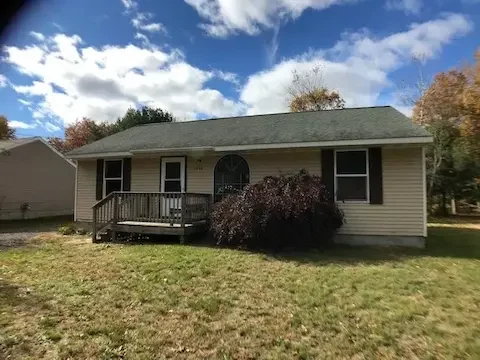
Abandoned properties represent one of the most complex ownership scenarios in residential real estate. Unlike occupied homes, vacant and neglected houses accumulate risk continuously — financially, structurally, and legally. In Southwest Michigan communities where seasonal weather, moisture exposure, and temperature fluctuation accelerate deterioration, the condition of an empty property can change dramatically in a short period of time.
For many owners, the decision to sell is not driven by convenience but by necessity. Ongoing property taxes, insurance requirements, code enforcement exposure, and repair escalation create mounting pressure that transforms an unused asset into a liability. Selling an abandoned property for cash offers a resolution centered on speed, certainty, and practicality — allowing owners to transfer responsibility without renovation, marketing, or prolonged uncertainty.
This guide provides a detailed, structured explanation of how abandoned property sales work, what challenges owners typically face, and how condition, legal status, and local market dynamics influence the transaction outcome.
What Counts as an Abandoned Property in Michigan?
An abandoned property is generally characterized by long-term vacancy combined with visible neglect or lack of maintenance. While legal definitions may vary depending on municipal policy and enforcement standards, practical identification relies on physical, financial, and administrative indicators.
Core Indicators
| Indicator | Description | Implication for Owners |
|---|---|---|
| Long-Term Vacancy | Property remains unoccupied for extended duration | Increased risk of damage and unauthorized entry |
| Visible Neglect | Structural deterioration, overgrowth, deferred maintenance | Reduced buyer demand and valuation |
| Utilities Disconnected | Essential services inactive | Indicates non-functional living condition |
| Unpaid Taxes or Liens | Financial obligations unresolved | Creates barriers for traditional sale |
Properties exhibiting multiple indicators simultaneously typically require specialized sale strategies because conventional buyers depend on financing approval, inspection outcomes, and habitability standards that abandoned homes rarely satisfy.
Vacancy also changes how the property interacts with its environment. Lack of climate control accelerates moisture intrusion. Absence of routine maintenance allows minor defects to become structural failures. Deferred upkeep compounds over time, making delay a direct contributor to value erosion.
Why Owners Choose a Cash Sale for Abandoned Homes
Traditional real estate transactions rely on a model built for habitable, market-ready homes. Abandoned properties fall outside that model because they present uncertainty, repair risk, and financing obstacles. Cash transactions realign the sale process around current condition rather than future potential.
Speed and Certainty
| Factor | Cash Transaction | Conventional Sale |
|---|---|---|
| Repair Requirements | None required | Often mandatory |
| Financing Contingency | None | Standard |
| Closing Timeline | Days to weeks | Several months |
| Buyer Risk Tolerance | High | Low |
Cash buyers evaluate property viability through risk-adjusted valuation rather than aesthetic appeal. This removes structural barriers that prevent distressed homes from reaching closing in conventional listings.
Beyond speed, certainty is often the decisive factor. Listing a distressed property introduces unpredictable variables: inspection negotiations, financing withdrawal, repair demands, appraisal shortfalls, and extended marketing periods. Cash transactions compress these variables into a single evaluation stage.
Financial Pressures That Make Holding an Abandoned Property Risky
Ownership costs continue regardless of occupancy. When a property produces no functional or financial return, these costs become pure loss.
Recurring Ownership Costs
Property taxes remain enforceable even when a structure is uninhabitable. Insurance premiums for vacant homes are typically higher due to increased risk exposure. Weather-related damage progresses without intervention. Security measures may be necessary to prevent vandalism or unauthorized entry. Maintenance requirements persist despite vacancy.
These expenses are not static. As deterioration accelerates, repair scope expands, increasing both cost and complexity. Deferred maintenance compounds — a minor roof leak evolves into structural rot; seasonal freeze-thaw cycles expand cracks; moisture intrusion leads to mold development.
Legal and Municipal Exposure
Municipal enforcement mechanisms are designed to prevent community decline and safety hazards. Even vacant properties must meet minimum maintenance standards. Violations may include unsafe structure designation, overgrown vegetation citations, unsecured entry points, and mandated emergency repairs. For detailed information on Michigan property and real estate laws, owners can refer to Michigan property and real estate laws.
Penalties may be financial or procedural. Municipal intervention can lead to fines, administrative orders, or compulsory remediation. Over time, enforcement exposure increases operational risk for owners who delay action.
Step-by-Step Process to Sell an Abandoned Property for Cash

Understanding the procedural framework allows owners to anticipate requirements and reduce uncertainty.
Step 1: Property Assessment
The initial stage gathers factual information about the property’s condition, vacancy duration, ownership status, and known issues. This stage does not require renovation, cleaning, or preparation. The objective is accurate evaluation rather than presentation.
Step 2: As-Is Valuation
Valuation reflects current condition and projected restoration effort. Key considerations include structural integrity, environmental exposure, location desirability, and local market demand for distressed properties. Pricing is based on present reality rather than hypothetical post-repair value.
Step 3: Offer Presentation
The offer outlines purchase terms without repair contingencies or inspection requirements. The seller is not required to perform upgrades, remediation, or cosmetic improvement.
Step 4: Title and Documentation Review
Documentation review ensures ownership transfer can occur without unresolved claims. Common elements include ownership verification, tax record evaluation, and identification of outstanding obligations.
Step 5: Closing and Transfer
Closing finalizes the transaction. Ownership transfers and responsibility for maintenance, repair, and compliance shifts to the buyer.
This streamlined structure reduces procedural friction, particularly for owners managing property remotely or facing logistical constraints.
Common Challenges When Selling Abandoned Real Estate
Distressed properties introduce complexity not typically encountered in standard residential sales.
Structural and Physical Challenges
| Condition Issue | Impact on Sale |
|---|---|
| Roof or foundation damage | Limits financing eligibility |
| Mold or water intrusion | Increases uncertainty |
| Vandalism or theft | Reduces market appeal |
| Deferred maintenance | Expands restoration scope |
Physical condition affects not only price but also the pool of potential buyers. Many traditional buyers are unwilling or unable to assume restoration risk.
Legal and Financial Complications
Ownership documentation may contain irregularities. Tax obligations may remain unresolved. Probate involvement may be necessary if ownership transferred through inheritance. Unknown liens may surface during title review.
Cash transactions accommodate complexity by resolving obligations within the closing process rather than requiring resolution before sale.
How Property Condition Influences Cash Offers
Pricing is determined through risk allocation rather than retail comparison.
Condition-Based Market Position
| Property State | Buyer Demand | Typical Pricing Approach |
|---|---|---|
| Mild neglect | Broad interest | Distressed market value |
| Moderate damage | Specialized buyers | Repair-adjusted pricing |
| Severe deterioration | Limited buyers | Land-value orientation |
The valuation model incorporates repair cost, timeline exposure, regulatory risk, and capital deployment. The price reflects transfer of uncertainty from seller to buyer.
Advantages of Selling an Abandoned House As-Is
The as-is transaction model is designed to resolve complex ownership scenarios efficiently.
Operational Simplicity
No staging, showings, or marketing coordination is required. Owners are not responsible for inspection remediation or contractor engagement. Transaction complexity is reduced to documentation and transfer.
Financial Efficiency
Avoiding renovation prevents capital outlay that may not be recoverable. Eliminating commissions and marketing expenses preserves net proceeds. Rapid closing reduces holding cost exposure.
Risk Reduction
Responsibility for structural integrity, compliance, and maintenance transfers immediately upon closing. Liability exposure associated with vacancy is eliminated.
For owners managing inherited, remote, or financially burdensome property, these advantages provide practical resolution. Selling a property in this way also aligns with best practices for distressed or vacant homes — for more detailed guidance, see this guide on selling a house as-is.
Timeline Expectations for Cash Sales in Fennville
Transaction timelines vary based on documentation readiness and title clarity, but distressed property sales typically proceed on an accelerated schedule.
| Stage | Estimated Duration |
|---|---|
| Initial evaluation | 24–48 hours |
| Offer issuance | Same day to 3 days |
| Documentation review | 3–7 days |
| Closing | 7–21 days |
Delays generally arise from documentation complexity rather than property condition.
Local Market Dynamics Affecting Abandoned Property Sales
Local environmental and economic factors influence transaction outcomes. Seasonal weather accelerates deterioration in vacant structures. Rural and semi-rural property distribution affects buyer specialization. Renovation demand fluctuates with regional investment cycles. Smaller communities often enforce maintenance standards more actively due to visibility of vacant structures.
These conditions make prolonged holding less advantageous than decisive resolution.
Costs Commonly Avoided Through a Cash Sale
Preparing an abandoned property for traditional listing involves both direct and indirect expenses.
Direct Costs Eliminated
| Expense Category | Typical Burden |
|---|---|
| Structural repairs | Substantial |
| Cosmetic renovation | Moderate to substantial |
| Marketing and staging | Moderate |
| Inspection remediation | Variable |
Indirect Costs Reduced
Holding cost accumulation ceases. Insurance obligations end. Time investment required for property management is eliminated. Market risk exposure is minimized.
The financial advantage of eliminating these expenses often exceeds potential price gains from conventional listing attempts.
Situations Where Cash Sales Are Especially Practical
Certain ownership contexts align naturally with as-is sale structures.
High-Complexity Ownership Situations
Inherited property with deferred maintenance often presents logistical and financial barriers. Out-of-state ownership complicates management. Financial hardship necessitates liquidity. Tenant abandonment creates operational disruption. Long-term vacancy amplifies deterioration.
In each scenario, the owner’s priority is resolution rather than optimization.
Preparing an Abandoned Property for Sale Without Repairs
Preparation focuses on documentation rather than physical improvement.
Recommended Preparation Steps
Ownership documentation should be accessible. Tax and utility records should be compiled. Personal belongings may be removed if feasible. Property access should be confirmed. Known issues should be disclosed accurately.
These steps streamline closing without requiring financial investment.
Understanding Value Versus Price in Distressed Sales
Comparing cash offers to fully renovated retail pricing misrepresents transaction economics.
Valuation Logic
Retail Value
minus Repair Cost
minus Holding Cost
minus Market Risk
equals Cash Market Value
This model reflects risk transfer rather than price reduction. The buyer assumes responsibility for restoration, compliance, and time exposure.
Frequently Asked Questions
Q. What is an abandoned property in Michigan?
Answer: An abandoned property is a house that is vacant for an extended period, often neglected, and may have unpaid taxes or code violations, making traditional sales difficult.
Q. Can I sell an abandoned house for cash without making repairs?
Answer: Yes. Cash buyers purchase properties as-is, so you do not need to invest in repairs, renovations, or staging before selling.
Q. How fast can I sell my abandoned property in Fennville, MI?
Answer: Most cash sales close within 7–21 days, depending on documentation, title status, and local municipal requirements.
Q. Are there legal issues when selling an abandoned property?
Answer: Some properties may have liens, unpaid taxes, or probate requirements, but cash buyers typically handle these issues during closing.
Q. Can I sell an abandoned house if I live out of state?
Answer: Yes. Remote closings and digital documentation allow out-of-state owners to sell abandoned properties without being physically present.
Q. How is the cash offer determined for an abandoned property?
Answer: Offers are based on current condition, repair costs, market demand, and potential risk, reflecting the property’s as-is value rather than full retail price.
Strategic Considerations Before Selling
The decision to sell should evaluate total ownership burden relative to transaction outcome.
Key Decision Factors
Severity of structural decline influences restoration feasibility. Ongoing ownership costs reduce net value over time. Legal exposure introduces uncertainty. Market demand for distressed property affects liquidity. Personal financial priorities shape decision timing.
Rational analysis focuses on total cost trajectory rather than nominal market value.
Long-Term Risks of Keeping an Abandoned Property
Delay increases both financial and structural burden.
Progressive Risk Timeline
| Time Vacant | Typical Outcome |
|---|---|
| 3–6 months | Maintenance issues emerge |
| 6–12 months | Structural concerns escalate |
| 12+ months | Legal and safety risk intensifies |
Environmental exposure compounds deterioration continuously.
Key Takeaways for Property Owners in Fennville
Abandoned properties generate ongoing cost and liability. Cash transactions prioritize certainty and efficiency. Property condition and legal clarity determine value more than presentation. Delay typically reduces net proceeds. As-is sales provide resolution for complex ownership scenarios.
Final Perspective
Selling an abandoned property is ultimately a decision about reducing risk and restoring financial control. Vacant homes do not remain neutral assets — they deteriorate, accumulate obligations, and increase exposure over time. A structured cash sale provides clarity, speed, and certainty by transferring responsibility and eliminating the ongoing burden of ownership.
For property owners facing prolonged vacancy, escalating costs, or logistical barriers, working with I Buy SW MI offers a direct path to resolution. By purchasing properties in their current condition and simplifying the transaction process, I Buy SW MI helps transform an uncertain situation into a defined outcome — allowing owners to move forward without repairs, delays, or continued liability.