

A distressed property can create a difficult decision. Renovating may improve the home’s marketability and possible sale price, but it also requires money, time, contractor management, and tolerance for unexpected problems. Selling as-is may reduce the work and uncertainty, but the price will usually reflect the property’s current condition.
The right choice depends on the numbers—not on the assumption that renovating always produces more money or that a direct sale is always easier. This guide shows Fennville homeowners how to compare realistic net proceeds, repair risks, timelines, and selling options before deciding.
Quick Answer
Renovating may make sense when the repairs are affordable, the scope is clear, and the expected increase in net proceeds exceeds the cost and risk. Selling as-is may be better when major repairs, limited funds, distance, timing, or uncertainty make renovation impractical. Compare repaired-sale, as-is listing, and direct-offer outcomes before choosing.
First, Identify What “Distressed” Means
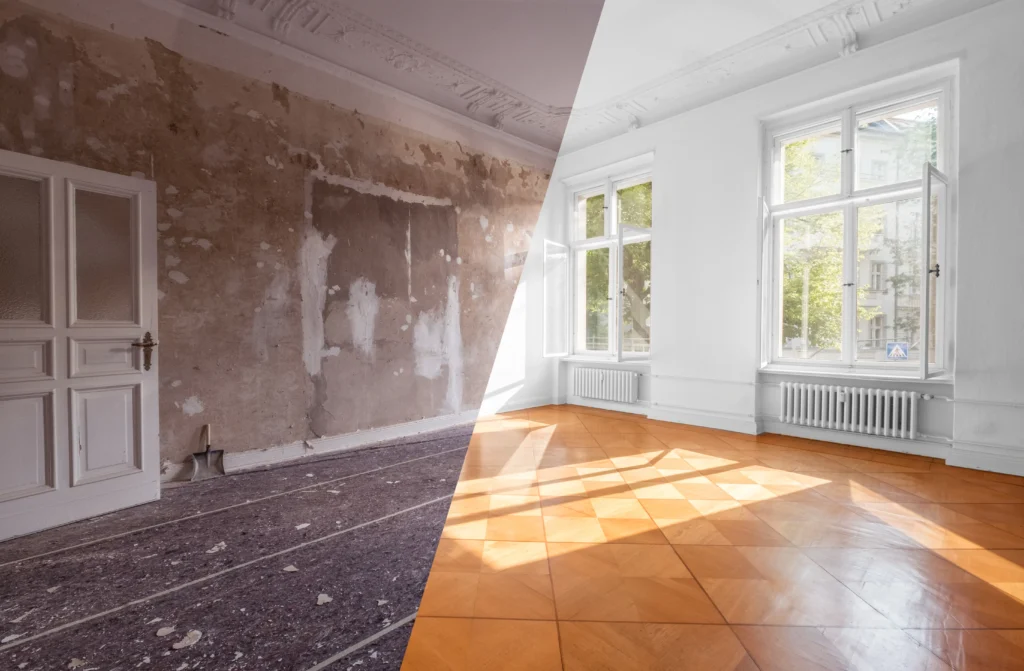
A distressed property may have physical problems, financial pressure, ownership complications, or a combination of these issues.
Physical distress can include:
- Roof, foundation, plumbing, or electrical problems
- Water, fire, mold, or storm damage
- Deferred maintenance
- Outdated systems or finishes
- An unsafe or uninhabitable condition
- Open permits or code concerns
Financial or legal distress may involve:
- Mortgage delinquency or foreclosure pressure
- Delinquent property taxes
- Recorded liens or judgments
- Probate or inherited-property questions
- Multiple owners who disagree
- Tenant or occupancy complications
- A vacant property that keeps generating expenses
These situations should not be treated as identical. A house with dated flooring may be a reasonable renovation project. A property with title defects, tax foreclosure risk, or serious structural damage may require professional help before any sale can move forward.
This article provides general education, not legal, tax, lending, construction, or financial advice. Consult the appropriate Michigan professional about your property.
Calculate the Three Values That Matter
Before choosing a path, estimate three separate outcomes.
1. Current As-Is Value
This is the likely market value of the property in its present condition. Ask a local real estate agent for an as-is price opinion and compare it with written offers from direct buyers when appropriate.
Do not estimate as-is value by taking a renovated sale price and subtracting only the repair cost. Buyers may also consider uncertainty, financing limitations, holding expenses, resale costs, and the possibility of hidden defects.
2. Expected Repaired Sale Price
Estimate what the property may sell for after the proposed work is completed. Use recent comparable sales with similar location, size, style, lot, condition, and renovation quality.
Avoid using the highest renovated sale in the area as your default expectation. A realistic range is more useful than one optimistic number.
3. Estimated Net Proceeds
The highest sale price does not necessarily produce the highest net result.
Use this framework:
Expected sale price
− repair and permit costs
− financing or borrowing costs
− property taxes, insurance, and utilities
− maintenance and security
− agent compensation and negotiated concessions
− title, closing, and other selling expenses
− mortgage payoff, liens, or other obligations
= estimated net proceeds
Complete the calculation for each option. Then compare the likely money remaining, time required, and risk accepted.
Build a Realistic Renovation Budget
A renovation estimate should be based on the property—not on a national average or an informal guess.
Obtain written estimates when possible. Ask contractors to separate:
- Required safety or structural work
- Mechanical-system repairs
- Water or moisture correction
- Permit-related work
- Cosmetic improvements
- Cleanup and disposal
- Optional upgrades
Add a contingency for hidden damage and changes in scope. Older houses can reveal problems after walls, flooring, roofing, or plumbing are opened.
For properties inside the city, review the City of Fennville’s building, planning, and zoning resources before starting work. The city provides information about permits, inspections, zoning, and building forms.
If the property is outside city limits but uses a Fennville mailing address, confirm which township or authority handles permits. Mailing addresses do not always determine the governing jurisdiction.
When Renovating Before Selling May Make Sense
Renovating can be reasonable when the work is limited, predictable, and likely to improve the property’s net result.
It may fit when:
- The house mainly needs cosmetic or clearly defined repairs
- You have enough cash or affordable financing
- Qualified contractors are available
- The property can remain insured and secure during the project
- You can manage the work or hire someone trustworthy
- Comparable sales support the expected repaired price
- The added proceeds appear greater than the full project cost
- You are not under urgent legal or financial deadlines
High-priority work may include active leaks, unsafe electrical conditions, nonfunctioning plumbing, heating problems, structural concerns, and defects that may limit buyer financing or insurance.
Cosmetic work may improve presentation, but avoid personalizing the property beyond what local buyers are likely to value. Expensive finishes do not guarantee an equal increase in sale price.
Some buyers may use renovation financing, including FHA’s 203(k) program, which combines eligible purchase or refinance costs with rehabilitation funds. Availability and qualification depend on the borrower, lender, property, appraisal, and program requirements.
When Selling As-Is May Be More Practical
Selling as-is may be the better choice when renovation would create too much financial exposure, delay, or management burden.
It may fit when:
- The repairs are extensive or difficult to price
- You do not have funds for the work
- The property is inherited and heirs live elsewhere
- The house is vacant and deteriorating
- You cannot reliably supervise contractors
- Carrying costs are reducing your equity
- The property has water, fire, foundation, or major system damage
- You need to resolve the ownership burden without maximizing every possible dollar
Selling as-is does not mean hiding defects or preventing inspections. It means offering the property in its current condition without agreeing in advance to complete renovations.
Michigan’s Seller Disclosure Act requires certain disclosures in qualifying residential transfers, subject to the law’s scope and exceptions. A Michigan real estate attorney or licensed professional can explain what applies to a specific sale.
An as-is property can be marketed through an agent, sold by the owner, or offered to a direct buyer. These methods can produce different prices, timelines, contingencies, and workloads.
For a complete selling-process guide, see how to sell a Fennville house that needs renovating.
Listing As-Is Versus Selling Directly
An as-is listing and a direct cash sale are not the same.
Listing As-Is
An agent-assisted as-is listing can expose the property to a larger group of buyers. That competition may support a stronger price, especially when the house is financeable or attractive to owner-occupants.
However, buyers may still request inspections, depend on mortgage approval, negotiate concessions, or cancel according to the contract.
Selling Directly
A direct buyer may purchase without requiring the seller to renovate, stage, or manage repeated showings. The offer may reflect estimated repairs, holding costs, resale expenses, and risk.
A cash purchase removes buyer mortgage approval, but it does not remove title review, contract terms, inspections, ownership issues, or the possibility of delay.
When reviewing a direct offer, ask:
- Who is the legal buyer?
- Is the buyer purchasing or assigning the agreement?
- Can the price change after a walkthrough?
- What inspection or cancellation rights exist?
- Who pays each closing expense?
- Which title company will handle closing?
- What happens if the buyer does not perform?
- Are all promises included in writing?
Homeowners ready to compare a direct sale can review the main Fennville cash home-buying service page and how the I Buy SW MI process works.
Compare the Main Options
| Factor | Renovate and List | List As-Is | Sell Directly |
|---|---|---|---|
| Upfront spending | Usually highest | Usually limited | Often limited |
| Preparation | Repairs, cleanup, and staging | Basic preparation may help | Depends on buyer |
| Market exposure | Broad retail market | Broad but condition-sensitive | One buyer or selected buyers |
| Possible gross price | Potentially highest | Usually below repaired value | Often reflects repairs and risk |
| Timeline | Includes project and listing time | No renovation period | May be shorter |
| Financing risk | Depends on buyer and condition | Can be significant | No buyer mortgage approval |
| Seller workload | Highest | Moderate | Often lower |
| Main uncertainty | Repair scope and market response | Buyer financing and negotiations | Contract terms and offer amount |
There is no universal winner. The strongest option is the one that best balances expected net proceeds, workload, risk, and timing for your circumstances.
Check Local Records Before Deciding
Property records can reveal facts that affect renovation and sale plans.
The Allegan County Register of Deeds records documents such as deeds and mortgages. The county also provides access to basic property records, while the Treasurer’s Office manages delinquent real estate tax collection and related processes. Public searches are useful starting points, but they do not replace professional title work.
Before committing money to renovation, verify:
- Current legal ownership
- Mortgage payoff
- Delinquent taxes
- Recorded liens
- Probate authority
- Open permits
- Utility status
- Insurance availability
- Occupancy or lease terms
If property taxes are delinquent, review the Allegan County Treasurer’s tax-search and payment resources promptly rather than assuming renovation or sale can wait.
A Realistic Fennville Example
Suppose an owner inherits a vacant Fennville-area house with an aging roof, outdated electrical panel, worn interior finishes, and extensive belongings.
A local agent estimates:
- Current as-is listing range: $145,000–$155,000
- Possible repaired sale range: $205,000–$215,000
Contractor estimates total $42,000, but the owner adds a $9,000 contingency. The project may take four months, during which the owner expects $6,000 in taxes, insurance, utilities, lawn care, travel, and other carrying expenses.
The owner compares:
Renovate and list: A higher possible sale price, but approximately $57,000 in repair and carrying costs before selling expenses, plus contractor and market risk.
List as-is: Market exposure without funding the full renovation, but buyers may negotiate after inspections or face financing limitations.
Direct offer: Less preparation and no buyer mortgage approval, but the offer accounts for repairs, holding costs, resale expenses, and uncertainty.
The owner should not simply subtract $42,000 from $210,000 and assume renovation is best. The decision should be based on net proceeds, available cash, project risk, and how long the owner can carry the property.
Common Decision Mistakes
Avoid these common mistakes:
- Using one contractor estimate without a contingency
- Assuming every improvement increases value by its cost
- Comparing a cash offer with a future listing price instead of net proceeds
- Ignoring taxes, insurance, utilities, and financing during renovation
- Starting work before checking permits
- Renovating before confirming ownership or probate authority
- Choosing finishes based on personal preference rather than likely buyer demand
- Assuming an as-is sale eliminates inspections or disclosures
- Accepting a direct offer without reviewing cancellation and price-change terms
- Waiting while a vacant property continues to deteriorate
Frequently Asked Questions
Should I renovate or sell my distressed property in Fennville?
Renovate when the scope is manageable and the likely increase in net proceeds exceeds the full cost and risk. Sell as-is when repairs, timing, distance, or uncertainty make the project impractical.
Which repairs matter most before selling?
Prioritize safety, active water intrusion, structural problems, electrical hazards, plumbing failures, heating issues, and defects that may affect insurance or financing. Cosmetic updates should come after essential work.
How do I know whether renovations are worth the cost?
Compare realistic repaired-sale net proceeds with an as-is listing and direct offer. Include repairs, contingency, permits, financing, carrying costs, agent compensation, concessions, and selling expenses.
Can I sell a distressed house as-is in Michigan?
Yes, an owner may offer a property in its current condition. Buyers can still inspect, negotiate, and exercise contract rights, and applicable disclosure requirements may still apply.
Will a cash buyer offer less than a traditional buyer?
A direct offer may be lower than the possible repaired retail price because it may account for repairs, holding costs, resale expenses, and risk. Compare estimated net proceeds rather than gross prices alone.
What can delay the sale of a distressed Fennville property?
Title defects, probate authority, multiple owners, liens, delinquent taxes, occupancy, missing documents, inspections, and contract contingencies can delay closing. Verify these issues early.
Choose Based on Net Proceeds, Risk, and Time
Renovating can be worthwhile when the work is controlled, affordable, and supported by the local market. Listing as-is may provide market exposure without requiring a full project. A direct sale may be practical when speed, condition, distance, or limited funds make renovation difficult.
Before deciding, obtain local price opinions, written repair estimates, title information, and a realistic carrying-cost calculation. Compare all options using expected net proceeds and the amount of risk you are prepared to accept.
When a direct as-is sale appears to fit your situation, contact I Buy SW MI or call (231) 392-3262 to request an offer you can compare with an agent-assisted sale or renovation plan.